
Cooking Technique
How to Deglaze a Pan
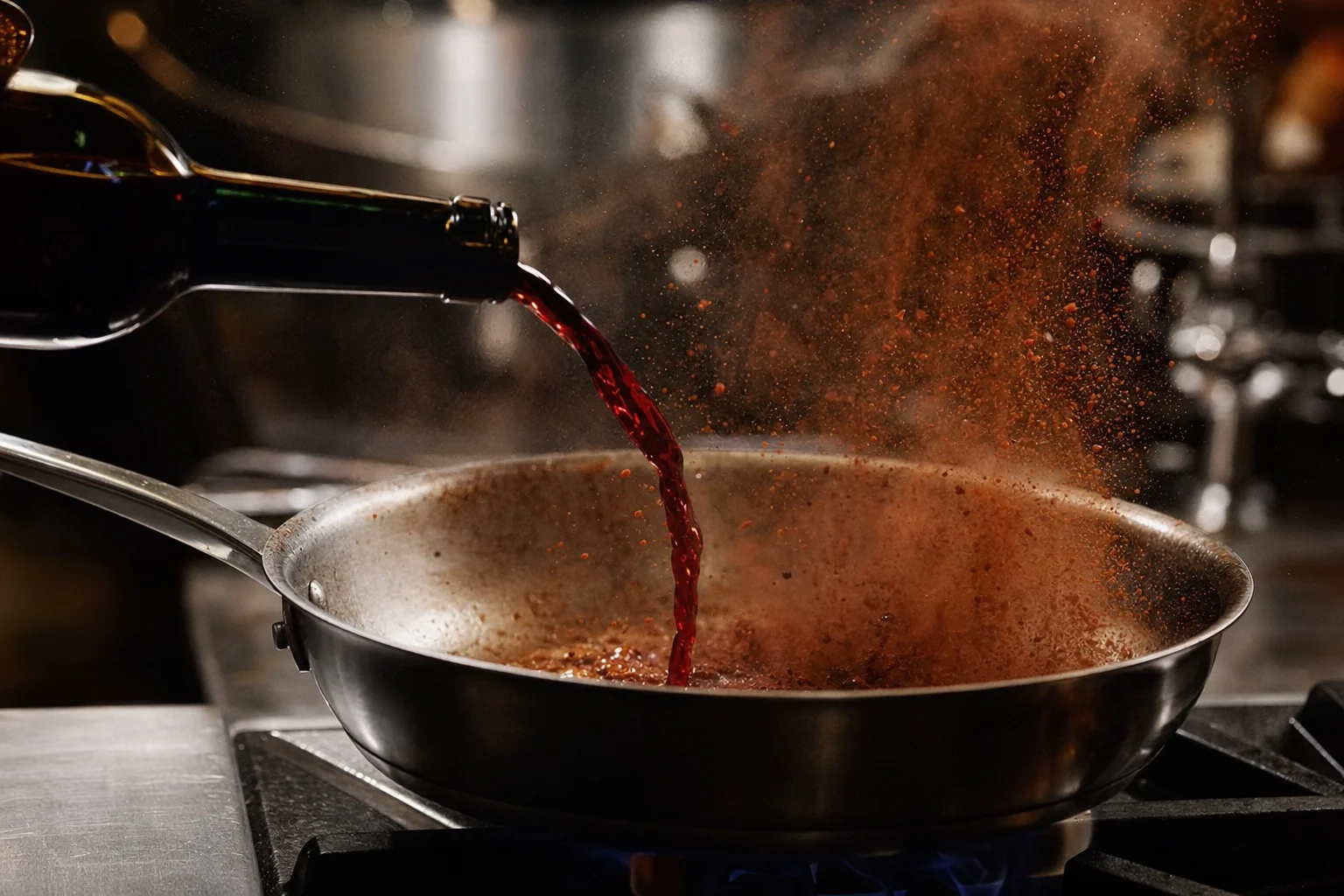
That crusty brown layer stuck to the bottom of your pan after searing is not a sign of a dirty pan — it is the foundation of the best sauce you will make all week. Deglazing dissolves it into liquid in under sixty seconds.
What Deglazing Is
Deglazing is the act of adding liquid to a hot pan to dissolve the fond — the concentrated, browned residue that clings to the pan surface after cooking at high heat. The liquid, combined with heat and physical scraping, loosens every compound from the pan surface and incorporates it into a sauce.
The word comes from the French déglacer, meaning to remove the glaze or frost. In a kitchen context, it refers specifically to removing the browned deposits from the bottom of a hot pan using liquid — and the result is a sauce base that has enormous flavor depth for relatively little effort.
Fond itself is a concentration of caramelized sugars, Maillard reaction products, rendered fat, and protein fragments. It is, in a sense, condensed cooking — everything that happened in the pan distilled into a thin, sticky layer. Deglazing captures all of that and puts it into your sauce.
Why It Matters
Most home cooks scrub fond off the pan after cooking, inadvertently discarding the most flavorful part of the whole meal. In professional kitchens, leaving the fond on the pan and building a sauce from it is standard practice — not because it saves time, but because nothing else produces that level of depth and complexity so quickly.
Deglazing accomplishes three things simultaneously:
- It cleans the pan without scrubbing (the liquid dissolves everything).
- It concentrates flavor as it reduces.
- It forms the base of a pan sauce that is uniquely tied to whatever you just cooked — a flavor relationship no premade sauce can replicate.
Even a simple deglaze with water beats no sauce at all. Deglaze with good stock or a splash of wine and you have something worth pouring over everything on the plate.
Step-by-Step: How to Deglaze a Pan
-
Remove the protein and evaluate the fond.
Pull the seared meat, fish, or vegetables from the pan and set aside to rest. Look at the pan bottom. Dark brown, with perhaps a few caramelized dark spots, is ideal. Mostly black means something burnt — that fond should be discarded and the pan cleaned before proceeding, as it will add bitterness rather than depth. -
Keep the heat on and add your deglazing liquid.
With the heat on medium-high, pour in your deglazing liquid all at once — about 1/4 to 1/2 cup for a single-portion sauce. It will hiss, steam, and reduce rapidly. This is correct and expected. The violent reaction is the liquid doing its work. -
Scrape the fond immediately.
Using a wooden spoon or flat-edged spatula, scrape the bottom of the pan in a back-and-forth motion while the liquid is still violently boiling. The thermal shock has already loosened most of the fond; scraping lifts it into suspension in the liquid. Work quickly — the pan is at its most cooperative in the first 30 seconds. -
Reduce until syrupy.
Let the liquid reduce by about half, stirring occasionally. For a wine or alcohol-based deglaze, this step also cooks off the raw alcohol. The liquid should smell deeply savory and slightly sweet, not sharp. If it smells raw or acidic, reduce further. -
Add stock and build the sauce (optional).
For a full pan sauce, add 1/3 to 1/2 cup of stock, any softened aromatics (shallots, garlic, thyme), and reduce again until the sauce lightly coats a spoon — about 2 to 3 minutes on medium heat. Taste and adjust salt and acidity. -
Finish with cold butter off the heat.
Remove the pan from heat and swirl in 1 to 2 tablespoons of cold butter, cut into cubes. This process — called mounting with butter — creates a glossy, slightly thickened sauce with a round finish. Serve immediately; mounting butter can break if reheated.
Deglazing liquid temperature tip: There is an ongoing debate about whether to use room-temperature or cold liquid when deglazing. Room temperature liquid prolongs the sizzle and keeps the pan hot; cold liquid shocks the pan and can warp thinner pans. Either works for most purposes — just do not use liquid straight from the freezer with a thin stainless pan.
What Liquid to Use When
The deglazing liquid should complement the protein and the direction you want the sauce to go:
- Dry white wine: Chicken, pork, fish, shellfish. Adds acid and a floral savory note.
- Dry red wine: Beef, lamb, duck. Adds tannins, depth, and color.
- Chicken or vegetable stock: Versatile. Neutral and builds the sauce body.
- Beef stock: Beef, lamb, mushrooms. Deep and rich.
- Apple cider or cider vinegar: Pork, duck, root vegetables. Sweetness and acid together.
- Beer (ale or stout): Beef, pork, sausage. Adds yeasty, bitter complexity.
- Water: Any situation. Captures fond flavor without adding its own character.
Common Mistakes
1. Discarding black fond
Black fond is burnt and bitter. If the pan has significant burning, do not attempt to deglaze it — wipe the pan and make a separate sauce. Some very dark patches alongside brown fond can usually be incorporated, but mostly-black pans should be cleaned first.
2. Not reducing the alcohol
Adding wine and immediately adding stock before the wine has reduced leaves a raw, sharp alcohol note in the finished sauce. Let the wine reduce until it is nearly dry before adding stock — this usually takes 60 to 90 seconds of vigorous boiling.
3. Using too much liquid
A deglaze works best with a modest amount of liquid that reduces quickly and concentrates. Starting with a cup of liquid means a long reduction time and a sauce that can become watery. Start small and add more stock if needed after the initial reduction.
4. Skipping the fat finish
A pan sauce without a fat finish — whether cold butter, olive oil, or a drizzle of cream — tastes thin and flat no matter how well the fond was developed. The fat emulsifies into the reduced liquid and gives it body, richness, and the coating quality that makes a sauce feel finished rather than like a thin broth.
Equipment Notes
Stainless steel is the best pan for deglazing because the fond is highly visible and the pan releases it cleanly into the liquid. The light-colored surface makes it easy to judge whether the fond is brown or black before you deglaze.
Cast iron works but holds heat so aggressively that it can over-reduce the deglazing liquid very quickly. Watch carefully and add more liquid or lower the heat faster than you would with stainless.
Nonstick produces minimal fond because the coating prevents protein from adhering. Deglazing a nonstick pan works, but you will get much less flavor return for the effort.
When NOT to Use This Technique
Skip deglazing when the fond is burnt, when you are cooking in nonstick and the return is minimal, or when the dish's sauce is built separately and the pan flavor would conflict. Some braised dishes also skip the deglaze step when the braising liquid itself serves the same function.
Recipes Where Deglazing Shines
- Pan sauce from seared meat — deglazing is the entire technique
- Coq au vin — red wine deglaze after browning chicken is what creates the base
- Pork chops with apple cider deglaze — cider cuts the richness of the pork
- Mushroom and sherry pan sauce over pasta or polenta
- Any braise: deglaze the browning pan before adding braising liquid
Never miss a deglaze again
NowCook's chef-written recipes flag every deglaze step — what liquid to use, when to add it, and how far to reduce. Start your 14-day free trial, no credit card required. $9/month after.
Frequently Asked Questions
What is fond?
Fond is the French word for "base" or "bottom," and in cooking it refers to the browned bits of protein and sugars that stick to the pan after searing or sautéing. It is concentrated flavor — caramelized sugars, Maillard compounds, and rendered fat — and it is entirely edible. Deglazing with liquid dissolves it into the sauce.
What is the best liquid for deglazing?
The best liquid depends on what you cooked and what flavor profile you want. Dry white wine works with chicken, fish, and pork. Red wine pairs with beef and lamb. Stock (chicken, beef, or vegetable) is a safe, neutral choice for anything. Beer and cider add character. Water works in a pinch but lacks the depth of wine or stock.
Do I need to cook off the alcohol when deglazing with wine?
Yes. Raw wine added to a sauce tastes thin and acidic. Reducing the wine until it is nearly dry — about 1 minute of vigorous boiling — concentrates its flavor and cooks off the harsh raw alcohol. What remains is the wine's body, fruit, and acidity, which balances beautifully in a finished sauce.
Can I deglaze with water instead of wine or stock?
Yes, and it still works. Water dissolves the fond and captures its flavor, but it adds nothing of its own. Stock gives you more body and base flavor; wine gives you acid and complexity. Water is the right call when you want the fond flavor to come through cleanly or when no other liquid is available.
What does it mean when the fond is black instead of brown?
Black fond means something burnt. Unlike brown fond — which is caramelized and savory — black fond is bitter and acrid. If the bottom of your pan is mostly black, discard the fond, wipe the pan clean, and make the sauce separately. A small amount of very dark fond can sometimes be worked around, but mostly-black pans should be cleaned before proceeding.
Related techniques
Common mistake to avoid