
Cooking Technique
How to Emulsify a Vinaigrette
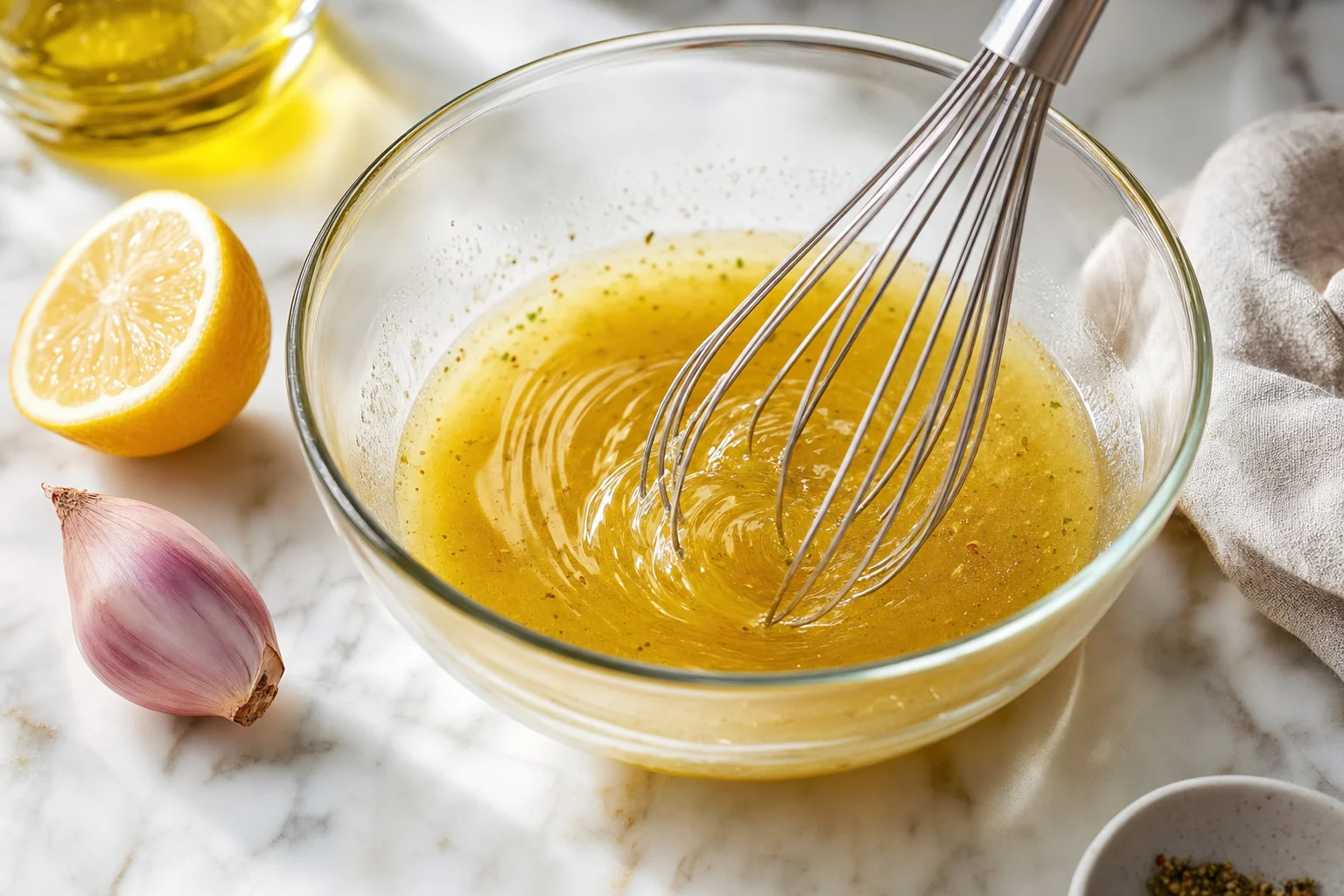
A vinaigrette that stays together coats the salad. One that separates pools at the bottom of the bowl and leaves the leaves underdressed. The difference is one teaspoon of Dijon mustard and the order in which you add things.
What Emulsification Is
Emulsification is the process of combining two liquids that do not naturally mix — in a vinaigrette, oil and a water-based acid such as vinegar or citrus juice — into a uniform, stable mixture. Left alone, oil and water separate because oil molecules are nonpolar and repel water molecules. An emulsion suspends oil droplets throughout the water phase, creating a unified texture.
A vinaigrette is a temporary emulsion: without an emulsifying agent, it will separate within minutes of being made. A true emulsion — like mayonnaise or a properly made hollandaise — is stable because it contains stronger emulsifiers (egg yolk lecithin) in greater quantity. Understanding this distinction matters because it tells you what to expect and how to intervene.
The key to a stable vinaigrette is adding an emulsifier — most commonly Dijon mustard, which contains mucilage from ground mustard seeds — and adding the oil slowly enough for the emulsifier to coat each new droplet before the next arrives.
Why It Matters
A properly emulsified vinaigrette does several things a simple oil-and-vinegar drizzle cannot:
- Even coating: The unified dressing clings to leaves, vegetables, and grains uniformly. A separated dressing coats unevenly, leaving some bites overdressed and others tasteless.
- Better texture: An emulsified dressing has a slightly creamy, coating quality that rounds out the sharpness of the acid and integrates the oil flavor rather than making it feel heavy.
- Longer shelf life: A stabilized emulsion with an emulsifier stays usable for longer in the refrigerator before separating to the point of being unusable.
- Flavor integration: Whisking disperses aromatics — garlic, herbs, shallots — throughout the dressing rather than letting them sink to the bottom.
Step-by-Step: How to Emulsify a Vinaigrette
-
Combine acid, emulsifier, and seasoning first.
In a bowl, combine 2 tablespoons of vinegar or citrus juice, 1 teaspoon of Dijon mustard, a pinch of salt, freshly ground pepper, and any aromatics (minced shallot, minced garlic, honey). Whisk until the salt is dissolved and the mustard is fully incorporated. Getting these elements combined before the oil arrives is critical. -
Add oil very slowly at first.
Begin adding 6 tablespoons of oil drop by drop while whisking constantly. The initial drops need to be coated by the mustard before the next drop arrives. After about half the oil is incorporated and the dressing looks slightly thickened and creamy, you can begin adding oil in a thin, steady stream rather than drops. -
Whisk continuously.
The physical action of whisking is what does the work — it creates shear force that breaks the oil into smaller and smaller droplets. Keep a firm, steady rhythm. If you stop, the droplets can begin coalescing before all the oil is added. -
Check the texture.
A properly emulsified vinaigrette should look uniformly opaque and slightly pale (from the dispersed oil droplets), not clear and separated. Lift the whisk and observe how it drips — slightly thickened is correct. -
Taste and balance.
Dip a leaf or a piece of bread and taste. Adjust the balance: add more acid if it tastes flat or oily, add more oil if it tastes sharp or harsh, and add more salt if all the flavors seem dim. A well-balanced vinaigrette should make the ingredient it is dressing taste more like itself, not like vinegar or oil.
Jar method shortcut: Add all vinaigrette ingredients to a small jar, seal tightly, and shake for 30 seconds. The jar shaking method works well for mustard-based vinaigrettes and requires no bowl or whisk — just remember to shake again before each use.
Common Mistakes
1. Adding oil too fast
Pouring all the oil in at once overwhelms the emulsifier before it can coat the droplets, and the dressing breaks immediately into a greasy puddle. The fix is simple: add oil slowly, especially for the first half. Once the dressing is visibly thickened and creamy, the rest of the oil can go in more quickly.
2. Skipping the emulsifier
A vinaigrette made with only oil and vinegar will separate in minutes. One teaspoon of Dijon mustard per two tablespoons of vinegar is all it takes to create a dressing that holds together for hours. Honey, garlic paste, and egg yolk also work. Choosing not to add any emulsifier means accepting that the dressing will need to be shaken every time and will dress the salad unevenly.
3. Wrong ratio
Too much acid and the dressing is sharp and harsh. Too much oil and it tastes greasy and flat. Start at 3:1 (oil:acid) and adjust. The strength of the acid matters — a mellow rice wine vinegar can handle a 2.5:1 ratio; a strong red wine vinegar may need 4:1.
4. Not tasting before dressing
Most dressing mistakes are discovered at the table rather than during preparation. Always taste the dressing with the ingredient it will dress before plating — a bite of lettuce or grain with a drop of dressing tells you immediately whether the balance is right.
Equipment Notes
A wide bowl and a medium balloon whisk are the most efficient tools. The wide bowl gives the whisk room to move and incorporates air into the dressing, which helps with texture. A small bowl makes it difficult to whisk without splattering. A jar with a lid is the low-equipment alternative and works well. A blender or immersion blender creates the most stable emulsion and is useful for large quantities.
When NOT to Use This Technique
Some dressings are intentionally separated — a classic Italian oil and balsamic drizzle, a simple lemon squeeze over fish, or a soy-sesame finish where the separation is part of the aesthetic. Not every dressing needs to be emulsified. If the dish calls for a light, delicate coating rather than a creamy one, a simple combined drizzle is fine. Emulsification is for when you want the dressing to cling and coat uniformly.
Recipes Where Emulsified Vinaigrette Shines
- Classic French bistro salad with frisée and lardons
- Grain bowls where the dressing needs to coat grains and vegetables evenly
- Roasted vegetable salads where the warm vegetables benefit from a clingy dressing
- Any composed salad where the dressing is dressed to order at the table
- See the guide on fixing a broken emulsion for when things go wrong
Build better dressings from what you have
NowCook generates recipes from your actual pantry — including the vinegars, oils, and mustards you already have. Start your 14-day free trial, no credit card required. $9/month after.
Frequently Asked Questions
What is the standard vinaigrette ratio?
The classic French ratio is 3 parts oil to 1 part acid. This is a starting point, not a rule — some vinaigrettes work at 2:1 for sharper dishes, and others go to 4:1 for very mellow dressings. The right ratio depends on the acid strength (a sharp red wine vinegar needs more oil than a gentle rice wine vinegar) and personal taste.
What is an emulsifier in a vinaigrette?
An emulsifier is a molecule that has both a water-attracting end and a fat-attracting end. In a vinaigrette, it positions itself between the oil droplets and the acidic water phase, keeping them dispersed rather than letting them separate. Dijon mustard is the most practical home emulsifier. Honey, egg yolk, and garlic paste also contain emulsifying compounds.
Why does my vinaigrette always separate?
A vinaigrette without an emulsifier will always separate eventually — that is physics, not a mistake. Add Dijon mustard as an emulsifier, whisk in the oil slowly, and store in a sealed jar. Even an emulsified vinaigrette will separate if left undisturbed — shake or re-whisk before using. The goal is a dressing that stays together long enough to coat the salad properly.
Can I use a blender or shaker jar instead of whisking?
Yes. A jar with a tight lid works well for simple vinaigrettes — add all ingredients, seal, and shake vigorously for 30 seconds. A blender or immersion blender creates a more thoroughly emulsified, almost creamy result because it breaks the oil into much smaller droplets than hand-whisking can achieve.
How do I fix a broken vinaigrette?
Start fresh in a clean bowl with a small amount of Dijon and a splash of vinegar. Whisk to combine, then slowly drizzle in the broken vinaigrette while whisking constantly, treating it like it is fresh oil. The new emulsifier will re-coat the existing oil droplets and pull the dressing back together. For related emulsion fixes, see the broken emulsion rescue guide.
Related techniques
Related mistake guide