
Cooking Technique
How to Bloom Spices
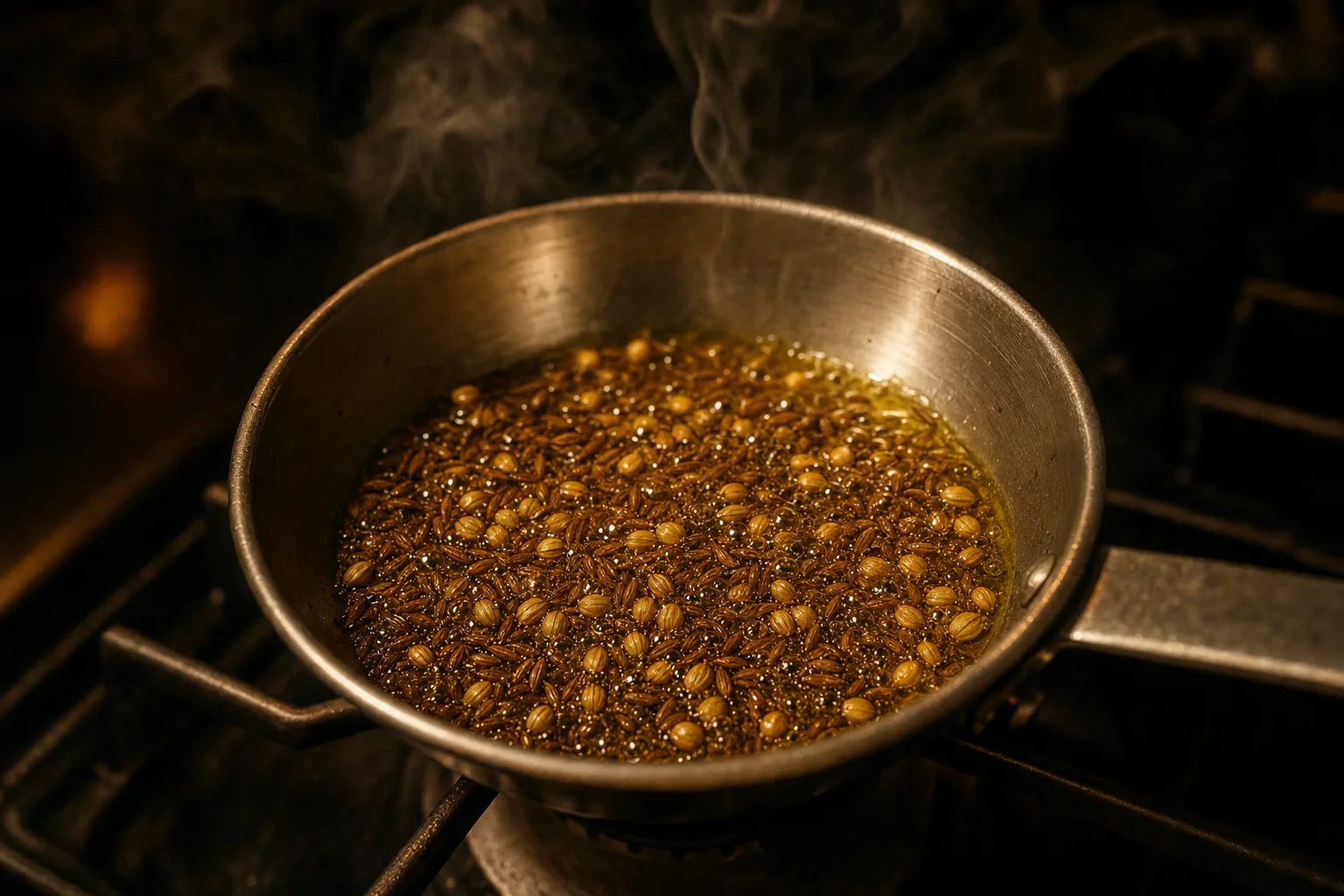
Spices added raw to a pot at the end of cooking taste dusty and one-dimensional. Bloomed in hot fat for thirty to sixty seconds at the start, the same spices taste deep, round, and layered. One minute. Completely different dish.
What Blooming Spices Means
Blooming spices — sometimes called tempering or tadka in South Asian cooking — is the technique of briefly cooking spices in hot fat before adding any other ingredients. The heat activates and releases the volatile aromatic compounds trapped within the spice, while the fat acts as a solvent and carrier, distributing those compounds evenly throughout the dish.
Most of the flavor compounds in spices are fat-soluble, not water-soluble. When spices are added directly to a water-based liquid — a simmering broth, tomato sauce, or coconut curry — only a fraction of their flavor compounds dissolve and disperse. In fat, the release is dramatically more complete. This is why a curry made by blooming spices in oil tastes more fully spiced than one where the spices are simply stirred into the liquid at the end.
The difference is chemical but also physical: blooming converts the dry, dusty aromatic compounds of ground spice into a fragrant oil that coats every other ingredient it meets. The flavor carries further and feels more integrated rather than sitting on top of the dish like a separate layer.
Why It Matters
The technique is brief — under two minutes — but its impact on a finished dish is substantial. Home cooks who master blooming report that their curries, soups, and stews suddenly taste "cooked longer" or "more complex" without any change to the actual cooking time. That perceived depth comes from the more complete flavor extraction that blooming provides.
Blooming also sets the flavor base for the entire dish. In most curry and stew traditions, spices are bloomed at the very beginning — in the same fat that will be used to cook the onions, garlic, and everything else. As the other ingredients cook in that spiced fat, they absorb those flavors throughout. Compare this to adding spices at the end, where they coat the surface of the finished dish without penetrating it.
There is also a visual component: properly bloomed spices give dishes a deeper, more saturated color. Ground turmeric bloomed in oil turns from pale yellow to a rich gold. Cumin seeds turn from light brown to a deep, glossy brown. These color changes track directly with flavor development.
Step-by-Step: How to Bloom Spices
-
Heat fat in a heavy pan over medium heat.
Add 1 to 2 tablespoons of neutral oil, ghee, or butter to a heavy pan — cast iron or stainless steel work well. Heat until the fat is hot enough to sizzle when a pinch of spice is dropped in. Too-cool fat will absorb the spices rather than activating them; too-hot fat will burn them. -
Add whole spices first.
If you are using whole spices — cumin seeds, mustard seeds, fennel seeds, cardamom pods, cinnamon sticks, dried chilis — add them to the hot fat first. They need more time than ground spices. Cook for 30 to 90 seconds, stirring, until mustard seeds begin to pop, cumin seeds darken slightly and become fragrant, and the oil smells strongly aromatic. -
Add ground spices and stir immediately.
Ground spices have a very high surface area and can burn within 20 seconds if left unstirred. Add them to the hot fat and stir constantly from the moment they touch the pan. Keep them moving. -
Cook until fragrant, not brown or black.
The blooming is complete when the raw, dusty smell has shifted to a deeper, more rounded, toasted aroma — typically 30 to 60 seconds for ground spices. The color should deepen but not darken to brown. Pull the pan from heat or add the next ingredient the moment the aroma peaks. -
Add aromatics or liquid immediately.
Once bloomed, add diced onion, garlic, ginger, or a splash of liquid to stop the cooking. The moisture will sizzle vigorously — this is expected and correct. Onions are particularly useful here as they immediately cool the pan while beginning to soften in the spiced oil. -
Scrape up any spice residue.
After adding liquid, scrape any spice deposits from the pan bottom using a spoon. These concentrated deposits carry intense flavor and should be dissolved into the dish rather than left behind on the pan surface.
The aroma test: Bloomed spices smell assertive and round, not raw and dusty. If the aroma is still flat after 30 seconds, the fat is not hot enough. If it smells sharp or acrid, the pan is too hot — add aromatics immediately to cool it down.
Whole vs. Ground: What Changes
Whole spices and ground spices bloom differently and serve different purposes. Whole spices contribute their flavor slowly throughout the cooking process — they are meant to infuse the fat and then the liquid gradually, releasing flavor over time. They are often left in the dish and eaten around, or removed before serving.
Ground spices release their flavor rapidly and intensely and are usually meant to be incorporated fully into the finished dish. They are added after whole spices have bloomed, when the pan has slightly cooled (from adding onions or other aromatics), to reduce the risk of burning.
In many recipes both are used: whole spices bloom first for baseline depth, then onions soften in the spiced oil, and then ground spices are added to the softened onion base to build the main spice character of the dish.
Common Mistakes
1. Heat too high for ground spices
Ground spices burn in 20 seconds at high heat. After whole spices have bloomed and onions have been added (which cools the pan), reduce to medium before adding ground spices. Always have your next ingredient ready to add immediately after the ground spices go in.
2. Not stirring continuously
Ground spices left unmoved in hot fat will burn in a single spot before the rest has even bloomed. Keep constant motion — the goal is even heat exposure across all the spice particles.
3. Adding cold or wet aromatics before the spices are done
Whole wet onions added before whole spices have had time to bloom will steam the spices rather than fry them, muting the blooming effect. Let whole spices bloom fully in just oil first, then add aromatics.
4. Using old, flat spices
Blooming cannot rescue spices that have fully lost their volatile compounds through age. Ground spices older than a year and whole spices older than two years will not produce the expected aroma when bloomed. If a spice smells like nothing when you open the jar, it will taste like nothing in the dish.
Equipment Notes
A heavy-bottomed pan distributes heat evenly and prevents hot spots that can burn spices. Cast iron and stainless steel are both good choices. Thinner pans — inexpensive stainless or aluminum — can develop hot spots that burn ground spices before they have fully bloomed. If you have only a thin pan, use slightly lower heat and stir more actively.
When NOT to Use This Technique
Some preparations are better served by adding spices raw or by dry-toasting them separately. Dry rubs for grilling, spice-crusted fish that will be seared, and finishing spices (like dukkah or za'atar drizzled over a finished dish) are all situations where blooming in fat is not the right approach. Also skip blooming when the recipe is oil-free and the dish is being deliberately built in a water base — dry toasting the spices first is the alternative in that case.
Recipes Where Blooming Shines
- Turkish red lentil soup — cumin and paprika bloomed in butter finish the bowl
- Any curry: the technique is the foundation of South Asian, North African, and Middle Eastern cooking
- Dal tadka — bloomed whole spices and aromatics poured over cooked lentils
- Black bean soup — cumin and chili bloomed first gives depth no amount of simmering will replicate
- Roasted vegetables finished with a cumin-coriander bloomed oil
Pantry spices, used properly
NowCook builds recipes around what is already in your pantry — and the technique notes in each recipe include spice blooming steps written by a working chef. Start your 14-day free trial, no credit card required. $9/month after.
Frequently Asked Questions
What does it mean to bloom spices?
Blooming spices means toasting them briefly in hot fat to activate and release their volatile aromatic compounds. Many spice flavors are fat-soluble — they dissolve into oil much more completely than into water. Blooming disperses those flavors through the fat, which then carries them throughout the entire dish as it cooks.
Can you bloom spices in water instead of oil?
You can toast dry spices in a dry pan (no fat at all) to develop flavor through heat alone. But most spice flavor compounds are fat-soluble, not water-soluble, which is why blooming in fat is more effective than simmering in water. Dry toasting works well as a prep step before grinding whole spices, but it is not a substitute for the fat-blooming step when building a dish.
How do you know if spices are burnt?
Burnt spices smell acrid and bitter — distinctly different from the deep, warm, toasted aroma of properly bloomed spices. Visually, burnt ground spices turn dark brown to black and begin to smoke. Whole spices that are burnt become black and smell charred. If you see smoke or smell bitterness, discard the spices, wipe the pan, and start again.
Should you bloom spices before or after onions?
It depends on the spice and the recipe. In many Indian-style curries, whole spices are bloomed first in the oil, then onions are added to cool the pan. Ground spices are often added after the onions have softened, because the moisture from the onions prevents the ground spices from burning as quickly. Know which spices you are using and adjust timing accordingly.
Does blooming spices make a noticeable difference?
Yes, significantly. The same curry made with bloomed versus unbloomed spices has more aromatic depth, better color, and a flavor that seems to coat the palate. Raw ground spices from a jar taste dusty and flat by comparison. The technique takes under a minute and the difference is not subtle. See also the guide to fixing a bland soup or stew — blooming spices is one of the core fixes.
Related techniques
Related mistake guide